Singapore and tropical Asia, Japan and temperate East Asia
Habitat
coast and mangroves
Colour
white, grey, yellow
Size
small (under about 20 cm)
IUCN status
Least Concern
IOC breeding range
AF, PAL, OR, AU (w Europe, sw Russia, c Asia, Mongolia to se Russia, Japan, e China, Taiwan and Vietnam; n, w Africa; Persian Gulf and Iraq to Indus Valley (Pakistan) and Gangetic Plain (nc India); Sri Lanka; Gulf of Thailand, Malay Pen., Singapore, and islands off Greater Sundas; off New Britain (se Bismarck Arch.), Bougainville (n Solomon Is.); coastal nw, n, e, se Australia and Tasmania; and Saipan (s Northern Mariana Is., nw Micronesia))
Identification
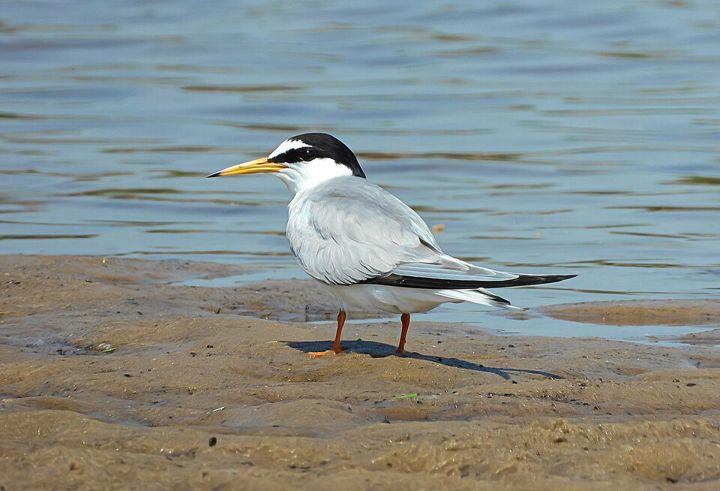
A small tern, 21–25 cm long with a 41–47 cm wingspan. In breeding plumage a black cap with a white forehead, a thin sharp yellow bill with a black tip and yellow legs; pale grey above, white below. In winter the white forehead is larger, the bill black and the legs duller. The flight is fast and jerky, with hovers over the water before plunging for small fish.
Habitat
Breeds in colonies on gravel or shingle beaches, sandbars, river islands and salt pans, laying two to four eggs on bare ground; fiercely defends the nest and dives at intruders. Feeds over shallow sea, estuaries and reservoirs.
Distribution
Breeds on the coasts and inland waterways of Europe, Asia, North and West Africa and eastern Australia, in East Asia from Japan and eastern China and Taiwan to Vietnam; some populations winter in subtropical and tropical seas as far as South Africa and New Zealand. Recorded all year on Singapore's coast.
Season and behaviour
Breeds April to September in eastern China and Japan; seen all year in Singapore, more in winter. Courtship, with the male carrying fish, is the liveliest time.
Photography tips
These are the FilmAnalysis editors' notes, not content from the sources.
In the hover it is almost still, so take that moment; the plunge and the exit with a fish need 1/3200 s. White plumage clips easily against a bright background, so underexpose a little. Eggs and chicks are superbly camouflaged: never enter a beach colony, shoot from its edge with a long lens.
Field ethics: keep a distance at which the bird does not change its behaviour; never approach or publish nest sites; no baiting, playback or flash; never clear vegetation around a nest; follow reserve rules and stay on paths.
Photographic styles
White minimalism of sea and sky; high-speed freezes.
Similar species
Black-naped tern (whiter rump and tail, tropical islands); common tern (much larger, red or black bill).
Related badge
The album badge "a gull" unlocks when the vision model explicitly names a a gull in your photo and you rate the analysis. The badge stops at "a gull": it does not tell species apart, and this page existing unlocks nothing.
The illustration is original FilmAnalysis artwork. The photograph is from Wikimedia Commons; its licence and author are under it.