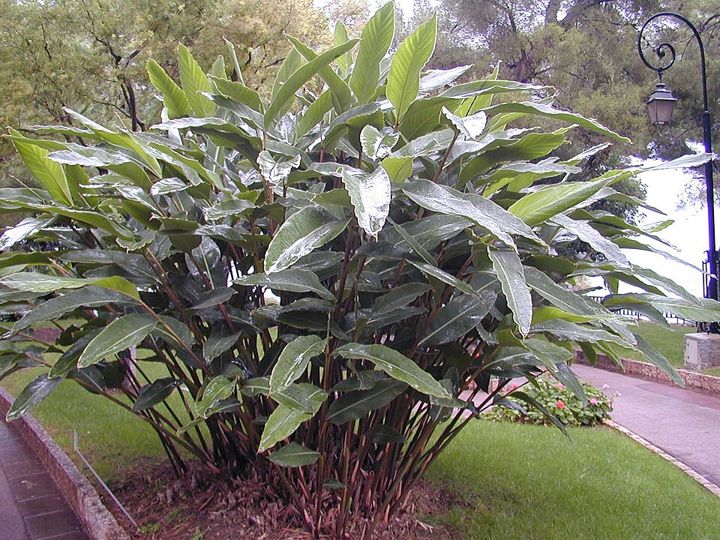
Singapore and tropical Asia, Japan and temperate East Asia
Season
spring, summer
Shape
hanging raceme
IUCN status
Data Deficient
Identification
A rhizomatous evergreen tropical perennial in upright clumps 2.4–3 m tall in the tropics. Funnel-shaped flowers in drooping racemes, the buds like strings of pearls or shells, white or pink with pink tips, opening to show a yellow lip streaked and spotted red like a small bird. Three stamens, only one with pollen. Globose striated fruit turning orange-red. The leaves wrap rice dumplings and are used in medicine (getto in Okinawa). Once called Alpinia speciosa and renamed to end confusion with torch ginger.
Habitat
Forest edge, streamsides, ravines and gardens in moist half-shade, also grown as a large foliage and cut-flower plant.
Distribution
Native to East Asia: southern China, Taiwan, southern Kyushu and the Ryukyus; common as a landscape plant in Singapore, and getto is one of Okinawa's local emblems.
Season and behaviour
Peak bloom from April to June, into August in the tropics; both the pearl strings of bud and the bird-like open flowers are worth photographing, and the fruit from September to November.
Photography tips
These are the FilmAnalysis editors' notes, not content from the sources.
The drooping raceme suits an eye-level or upward view with the pearly buds against dark green leaves; the open flower wants a head-on macro of the red markings on the yellow lip. Half a stop under for white buds. Buds beaded with rain are best, and the texture of the big leaves in side light makes the background.
Photographic styles
Hanging strings of shell flowers; macro of a yellow lip with red lines.
Similar species
Alpinia japonica and A. hainanensis (same genus, upright or smaller inflorescences); torch ginger (upright torch-like heads, another genus).
Related badge
None yet. No validated photo recognition exists for this species, so no badge is tied to it: a name in the encyclopedia is not evidence in a photograph.
The illustration is original FilmAnalysis artwork. The photograph is from Wikimedia Commons; its licence and author are under it.
Why it is listed: this species comes from the Flower checklist (GBIF backbone and Wikidata verified). Names follow the GBIF backbone and Wikidata; the facts follow the sources below; photo recognition is not offered.