Singapore and tropical Asia, Elsewhere (in East Asia only in bird parks or botanic gardens)
Season
summer, year-round
Shape
large head
Identification
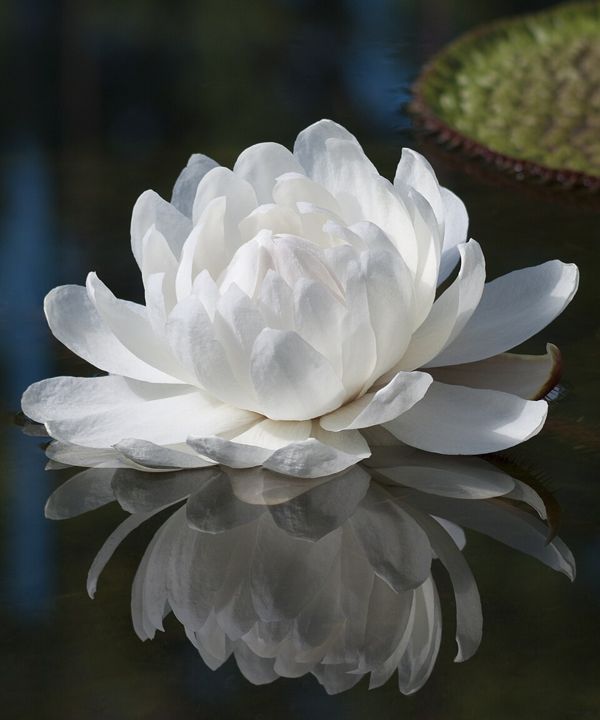
The second largest plant of the water-lily family. Huge leaves up to 3 m across with upturned rims like trays, the underside ribbed with a network of thick spiny veins, on submerged stalks 7–8 m long; the pads are astonishingly buoyant and carry tens of kilograms when the weight is spread. Flowers up to 40 cm across open white and strongly scented on the first night to draw scarab beetles, close over them for a day, and reopen pink the next evening to release them dusted with pollen. Native to Guyana and the Amazon basin, the national flower of Guyana, Vitória-Régia in Brazil. The Crystal Palace glasshouse of nineteenth-century Britain borrowed the structure of its leaf veins.
Habitat
Still water of river bays and flood lakes in the Amazon basin; grown only in large pools outdoors in the tropics or under glass, the signature plant of tropical botanic gardens.
Distribution
Native to tropical South America (Guyana, the Amazon basin); entirely cultivated in East Asia, in the pools of the Singapore Botanic Gardens and Gardens by the Bay all year, in southern Chinese botanic gardens (Guangzhou, Xiamen, Xishuangbanna) in summer, and in glasshouses or summer pools in northern China and Japan (ōonibasu, where gardens often sit children on the pads).
Season and behaviour
All year in the tropics, July to September in the north and Japan; each flower lasts two nights, white the first and pink the second.
Photography tips
These are the FilmAnalysis editors' notes, not content from the sources.
The leaf is the subject: from above, the array of trays and upturned rims is most graphic, and only a person or child sitting on a pad shows the scale (only at a garden's organised event). The flower opens at dusk, white one night and pink the next, so wait by the pool at dusk for both colours. The spines and network of veins underneath want a macro on an upturned leaf or rim. Reflections and trays from low.
Photographic styles
Giant trays from above; white and pink flowers at dusk.
Similar species
Santa Cruz water lily, Victoria cruziana (higher rims, tolerates cool, commoner in the north); Victoria boliviana (the largest, described only in 2022); Euryale ferox (large puckered leaves, no upturned rim).
Related badge
None yet. No validated photo recognition exists for this species, so no badge is tied to it: a name in the encyclopedia is not evidence in a photograph.
The illustration is original FilmAnalysis artwork. The photograph is from Wikimedia Commons; its licence and author are under it.
Why it is listed: this species comes from the Flower checklist (GBIF backbone and Wikidata verified). Names follow the GBIF backbone and Wikidata; the facts follow the sources below; photo recognition is not offered.